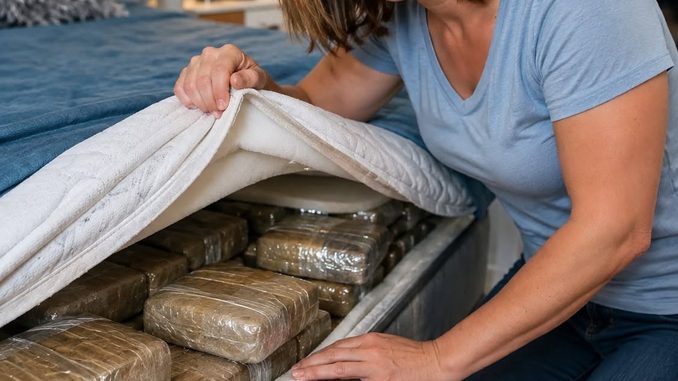
When Lina’s grandmother died, the family gathered in the old house expecting grief, paperwork and the uncomfortable business of dividing a lifetime into objects.
There was a modest house, a piece of land, furniture, jewelry, savings and several antiques that relatives immediately began discussing in terms of value.
Lina received none of them.
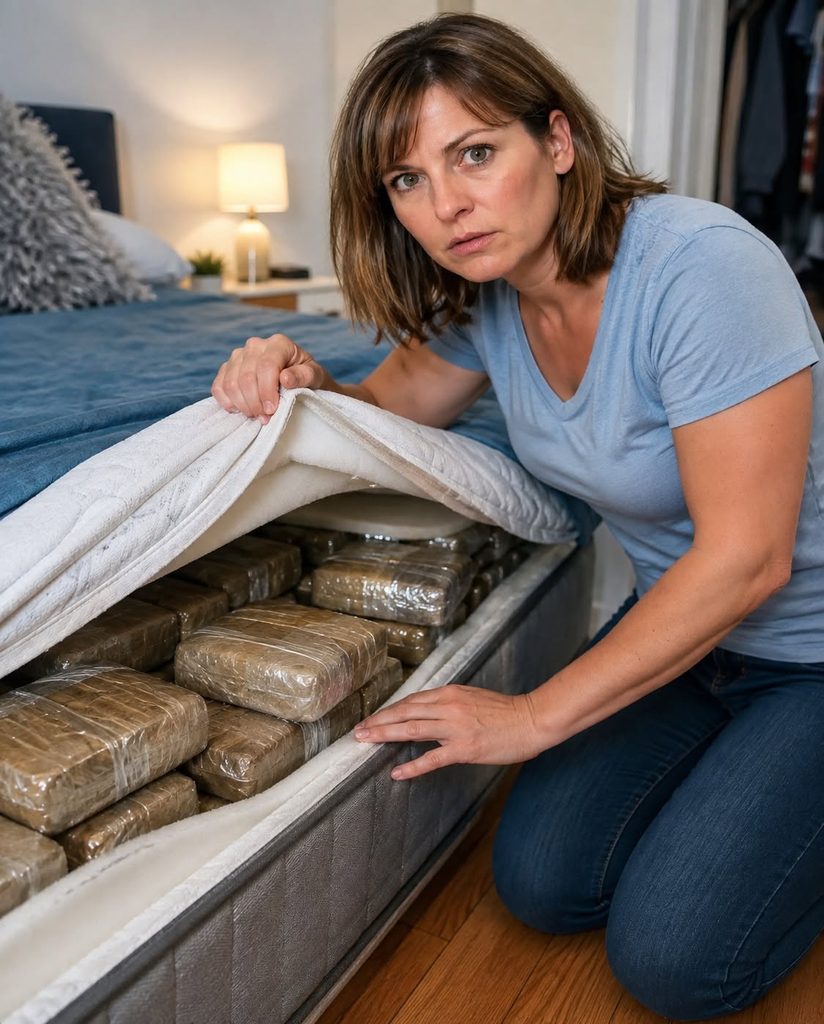
Her grandmother had left her an old mattress.
It was stained, heavy and so worn that one cousin laughed when it was carried from the bedroom.
“You inherited garbage,” someone joked.
Lina smiled weakly.
She could have been offended. Instead, she remembered something her grandmother had told her years earlier:
“Never decide what something is worth just because it looks old.”
So Lina took the mattress home.
Several days later, she placed it on the floor of her workshop and began cutting through the fabric.
Her knife suddenly struck something hard.
At that moment, the inheritance everyone had mocked began to make sense.
The Grandmother Who Saved Everything
Lina had been particularly close to her grandmother, Rosa.
Rosa belonged to a generation that disliked throwing useful things away. Glass jars were washed and reused. Buttons were removed from damaged clothes. Fabric scraps were carefully folded rather than discarded.
Her habits sometimes amused younger members of the family.
But Lina understood where they came from.
Rosa had spent part of her childhood in severe poverty. To her, waste was not merely careless; it was frightening.
She repaired objects long after other people would have replaced them.
The mattress was one of those possessions.
For as long as Lina could remember, it had been in her grandmother’s bedroom.
Whenever anyone suggested buying a new one, Rosa refused.
“This one is fine.”
It clearly wasn’t.
By the final years of her life, even Lina wondered why her grandmother remained so attached to it.
After the will was read, she finally began to understand.
An Unequal Inheritance
Rosa’s will surprised the family.
Her eldest son received the house.
Another relative inherited the land.
Jewelry and several valuable household objects were divided among others.
Then came Lina’s name.
“To my granddaughter Lina, I leave the mattress from my bedroom and everything belonging to it.”
There was an awkward silence.
Someone laughed.
Lina’s uncle asked the lawyer whether there had been some mistake.
There had not.
Lina was embarrassed, but not because she wanted more money.
She wondered whether she had misunderstood her relationship with her grandmother.
They had spent countless afternoons together.
Why would Rosa leave meaningful assets to relatives who rarely visited while giving Lina something apparently worthless?
Her mother suggested throwing it away.
Lina refused.
If Rosa had specifically mentioned the mattress in a legal document, there had to be a reason.
One Last Memory
That evening, Lina remembered a conversation from several years earlier.
She had been helping Rosa change the bed linens when she complained about how heavy the mattress was.
“Why don’t you replace this ancient thing?”
Rosa laughed.
“Because some old things carry more than people realize.”
At the time, Lina assumed she meant memories.
Now the sentence sounded different.
She examined the mattress.
There was nothing obviously unusual about it. The fabric was faded, several seams had been repaired and one side sagged badly.
Lina worked restoring furniture, so opening old upholstery was familiar to her.
She decided to take it to her workshop.
If nothing was inside, she could dispose of it afterward.
The Knife Hit Metal
Lina began by cutting carefully along one edge.
Dust rose from the old fabric.
Beneath the outer covering were layers of padding and springs.
Nothing unusual.
She continued.
Then the blade stopped.
A sharp metallic sound came from deep inside the mattress.
Lina froze.
She reached between the layers and felt something rectangular.
It was not part of the mattress frame.
She cut a wider opening.
Hidden beneath the padding was a small metal box wrapped in cloth.
Her hands began shaking.
The box was old and surprisingly heavy.
It was secured with a tiny lock.
Attached to the cloth was an envelope.
On the front, written in Rosa’s unmistakable handwriting, was one word:
Lina.
The Letter
Lina sat on the workshop floor before opening it.
The message was several pages long.
Rosa explained that she had spent much of her life quietly saving small amounts of money.
She had never trusted banks completely, a fear rooted in hardships from her youth. Over decades, she had kept part of her savings hidden.
But the box contained more than money.
It contained documents and objects connected to a chapter of Rosa’s life that most of the family knew almost nothing about.
A key had been taped inside the envelope.
Lina opened the metal box.
There were old photographs.
Several letters tied with ribbon.
A small velvet pouch.
And beneath them, carefully wrapped packages of cash accumulated over many years.
Lina stared at everything without touching it.
The relatives who had laughed about the mattress had been wrong.
But the money was not what affected her most.
A Family History Hidden With the Savings
The photographs showed Rosa as a young woman.
In several, she stood beside a small furniture shop.
Lina had never seen the building before.
One photograph showed Rosa holding a wooden chair beside a man Lina recognized as her grandfather.
The letters explained the rest.
Before raising their family, Rosa and her husband had operated a small repair business together.
Rosa had been skilled at upholstery.
She repaired chairs, sofas and mattresses while her husband handled carpentry.
Lina suddenly looked around her own workshop.
She restored furniture for a living.
She had always believed that interest had somehow appeared naturally.
Now she discovered that her grandmother had once done almost the same work.
Rosa had rarely spoken about it.
The business closed after financial difficulties, and her husband later found other employment.
But Rosa had kept photographs, notes and a few tools from those years.
The old mattress itself had been one of the final pieces they repaired together.
That was why she had never thrown it away.
Why Lina Received It
Rosa’s letter explained her decision.
She knew the family would argue about property.
She also knew most relatives would consider the mattress worthless.
That was intentional.
She wanted the contents to reach someone who valued meaning before price.
Rosa had watched Lina repair broken furniture rather than replace it.
She had watched her preserve objects other people dismissed.
Most importantly, Lina had spent time with her when there was nothing to inherit.
The letter made clear that the mattress was not a trick designed to punish the other relatives.
Rosa had distributed her visible property according to decisions she believed were fair.
But this private inheritance was different.
It was personal.
She wanted Lina to receive not simply hidden savings but the forgotten history of the woman she had been before becoming everyone’s grandmother.
The Velvet Pouch
Inside the pouch was a simple gold ring.
It was not elaborate.
Rosa’s letter explained that it had been the first valuable object she bought with money earned from her own upholstery work.
She had intended to sell it during several financially difficult periods but never did.
To Rosa, it represented independence.
Lina held the ring in her palm.
Suddenly the cash inside the box seemed secondary.
Money could be spent.
The photographs, letters and ring connected Lina to a life she had never known existed.
We often know our grandparents only through the roles they occupy when we meet them.
Grandmother.
Grandfather.
The person who cooks holiday meals.
The person who tells familiar stories.
It is easy to forget that they had entire lives before us.
They had ambitions, failures, jobs, friendships and versions of themselves their grandchildren never witnessed.
Lina had loved Rosa for years.
Only after her death did she begin discovering the young woman behind the grandmother.
When the Family Found Out
Lina initially told no one about the money.
She catalogued the documents and deposited the cash safely.
Eventually, however, she showed her mother the photographs and letters.
Word spread.
Some relatives reacted warmly.
Others immediately focused on the hidden savings.
One cousin who had laughed during the reading of the will suddenly questioned whether the contents of the mattress should belong exclusively to Lina.
The dispute was uncomfortable but unsurprising.
Inheritance has a strange ability to transform sentimental objects into financial calculations.
The wording of Rosa’s will, however, had been unusually precise.
Lina had inherited the mattress “and everything belonging to it.”
The hidden box had been intentionally placed there by Rosa, and her accompanying letter made her wishes unmistakable.
The joke was over.
Nobody called the mattress garbage anymore.
The Real Value of an Inheritance
Lina used part of the money responsibly.
She paid several outstanding expenses and invested some in her workshop.
But she refused to let the discovery become merely a story about unexpected wealth.
Instead, she framed copies of Rosa’s old photographs.
One went above her workbench.
Another showed Rosa standing proudly beside the furniture shop decades earlier.
Lina also kept several of her grandmother’s old upholstery tools.
They were outdated compared with modern equipment, but that hardly mattered.
They represented continuity.
The workshop that Lina had considered entirely her own creation suddenly seemed connected to a family tradition she had unknowingly continued.
Why We Misjudge Old Things
Modern life encourages replacement.
When something becomes scratched, outdated or unfashionable, buying a new version is often easier than repairing the old one.
The same habit can influence how we think about value.
We associate newness with worth.
But sentimental value follows different rules.
An inexpensive object may carry enormous emotional significance because of the memories attached to it.
An old table can contain evidence of decades of family meals.
A handwritten recipe can matter more than an expensive cookbook.
A damaged photograph can become irreplaceable because the people in it are gone.
Rosa’s mattress was objectively old and unattractive.
The family’s mistake was assuming that appearance told the entire story.
What Lina Did With the Mattress
After removing the hidden box, Lina considered throwing the mattress away.
Instead, she saved several sections of its original fabric.
She cleaned what could be preserved and used a small piece to upholster the seat of an old wooden chair from her grandmother’s house.
It was not worth much money.
That was precisely why Lina wanted it.
She placed the chair near the entrance to her workshop.
Customers occasionally asked about it.
When they did, Lina told them about Rosa.
Not about the amount of money in the box.
Not about relatives arguing over property.
She told them about a young woman who once repaired furniture beside her husband and later hid the evidence of that life inside an object everyone else considered useless.
What Rosa Really Left Behind
The inheritance changed Lina’s financial circumstances, but its deeper effect was different.
It changed the way she understood her grandmother.
Rosa was no longer only the elderly woman Lina remembered from childhood.
She had been a craftswoman.
A business owner.
A wife building something with her husband.
A woman who had experienced poverty deeply enough to hide savings inside a mattress.
And a grandmother who understood her family well enough to know exactly which person would hesitate before throwing that mattress away.
At the reading of the will, everyone had compared what they received.
A house.
Land.
Jewelry.
Furniture.
Then they looked at Lina’s worn mattress and laughed.
They believed she had inherited the least because they could see only what was on the surface.
Rosa had counted on that.
Sometimes the most valuable inheritance is not the object everyone fights to possess.
Sometimes it is the thing almost everyone else is willing to leave behind.
Lina’s grandmother had hidden money inside an old mattress.
But what she truly preserved there was something harder to measure: her history, her trust and one final lesson for the granddaughter who understood that old things should never be judged too quickly.
Отправить ответ