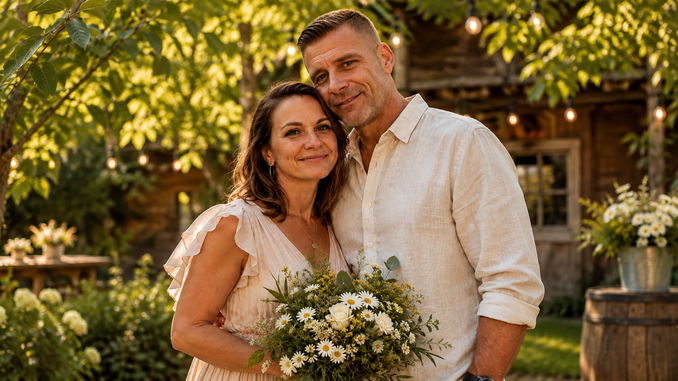
Six years after my husband Peter died, I married his closest friend.
Even saying that sentence once made me feel disloyal.
Daniel had known Peter since college. He had stood beside us on our wedding day, carried boxes into our first apartment and sat in a hospital corridor with me on the worst night of my life.
After Peter’s death, Daniel never tried to take his place. For years, he was simply the friend who remembered birthdays, repaired things I could not manage and understood why certain dates were harder than others.
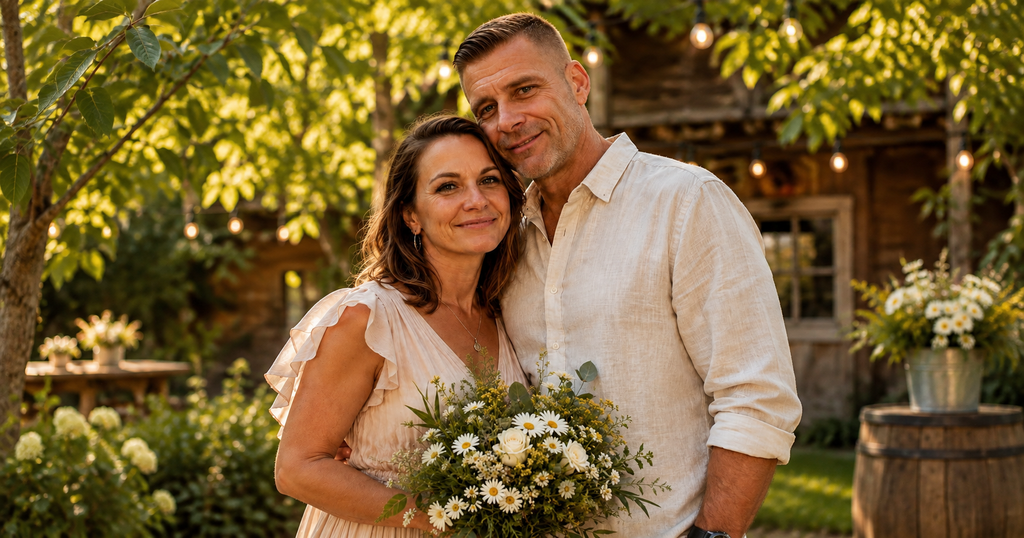
Eventually, friendship became something neither of us had expected.
We married quietly.
That evening, after the last guests left, Daniel did something that immediately made me question everything I thought I knew about the previous six years.
He opened a safe hidden behind a panel in his study.
Inside was a sealed envelope.
My name was written across the front.
I recognized the handwriting before Daniel said a word.
It was Peter’s.
“You need to read this,” Daniel whispered, “before we spend our first night together as husband and wife.”
The Life I Thought We Would Have
Peter and I married in our late twenties.
Our life was not remarkable, and that was precisely what I loved about it.
We argued about grocery lists, forgot appointments and spent Sunday mornings drinking coffee far longer than necessary.
Daniel was almost always somewhere nearby.
He and Peter had been best friends for more than a decade. Their personalities were completely different. Peter was impulsive and loud; Daniel was careful and reserved.
Their friendship somehow worked because of those differences.
Then, one rainy evening, Peter was killed in a highway accident while returning from a work trip.
There was no long goodbye.
No opportunity to prepare.
One telephone call divided my life into before and after.
Daniel Stayed When Everyone Else Returned to Their Lives
The weeks after the funeral were crowded.
People brought food.
Relatives slept in my spare room.
Friends called constantly.
Then, gradually, everyone returned to normal life.
That was understandable.
Their lives had continued.
Mine felt as though it had stopped.
Daniel remained.
Not dramatically.
He never told me I needed to “move on.” He never tried to make himself indispensable.
Sometimes he came over and repaired something.
Sometimes we ate dinner without mentioning Peter.
Sometimes we talked about him for hours.
Then Daniel would disappear for several weeks because, as I later understood, Peter’s death had devastated him too.
Grief was not mine alone.
When Friendship Became Something Else
Almost four years passed before anything changed between us.
One evening Daniel and I were sitting on my porch after dinner when I laughed at something he said.
It was an ordinary laugh.
Yet afterward, I felt guilty.
Not because I had laughed.
Because I had enjoyed being with him.
For months, I fought the feeling.
Daniel did too.
When he finally admitted that he cared about me, his first sentence was an apology.
“I never planned this.”
Neither had I.
We moved carefully.
Painfully carefully.
There were times when I wondered whether loving Daniel meant betraying Peter.
There were times when Daniel wondered whether he was betraying his best friend.
Eventually, we understood that grief and love do not follow simple rules.
Loving someone new does not erase the person who died.
We became engaged.
But Daniel was still keeping something from me.
The Safe
Our wedding was small.
By midnight, the house was quiet.
I had changed out of my dress when Daniel asked me to come into the study.
His face looked strange.
He moved a framed photograph, pressed against a section of wooden paneling and revealed a small wall safe.
I had never known it existed.
He entered the combination.
Inside were legal papers, an old watch and one envelope.
Daniel removed it carefully.
The paper had yellowed slightly.
Then I saw my name.
Anna.
Peter had written it.
My legs suddenly felt weak.
“Where did you get this?”
Daniel did not answer immediately.
“How long have you had it?”
“Six years.”
I stared at him.
“You had a letter from my husband for six years?”
“Yes.”
Anger arrived before curiosity.
“How could you keep this from me?”
Daniel looked as if he had expected that question every day since Peter died.
“Because he told me to.”
The Secret Peter Had Given Him
Several months before the accident, Peter and Daniel had taken a weekend trip together.
During that trip, Peter gave Daniel an envelope.
Peter had recently attended the funeral of a colleague who died unexpectedly, leaving a wife and two children. The experience had unsettled him.
So he wrote several letters.
One was for his parents.
Another was meant for me.
He gave mine to Daniel with specific instructions.
If something ever happened to him, Daniel was not to hand it to me immediately.
Peter believed I would spend the first years after his death treating every word as a command.
According to Daniel, Peter had said the letter should be given to me only if I eventually reached a major turning point in my life.
A remarriage.
A move far away.
Or another moment showing that I was genuinely beginning a new chapter.
The instruction had seemed absurd at the time.
Then Peter died.
Why Daniel Had Waited
“You should have told me,” I said.
“I almost did.”
“When?”
“About a hundred times.”
He told me he had nearly given me the envelope after the funeral.
Again on the first anniversary of Peter’s death.
Again when I sold Peter’s car.
Then, when our own relationship changed, the letter became even more difficult to handle.
Daniel feared that giving it to me while we were dating would look manipulative.
What if Peter’s words pushed me toward him?
What if they pushed me away?
Either possibility felt wrong.
So he waited until our wedding night, when my decision had already been made.
“You married me without knowing what’s inside,” Daniel said. “Whatever Peter wrote had nothing to do with your choice.”
For the first time, I understood why his hands were shaking.
He did not know what the letter said.
Peter had sealed it before giving it to him.
Peter’s Letter
I opened the envelope.
The first lines were ordinary.
Peter joked about how strange it felt to write a letter he hoped I would never read.
Then the tone changed.
He wrote about our marriage.
About the life he hoped we would have.
About his fear that, if he died young, I would confuse continuing to love him with refusing to live without him.
One passage stopped me.
Peter wrote that grief should never become a promise to remain unhappy.
He did not ask me to preserve our house.
He did not ask me to remain single.
He did not ask me to visit a grave every week or measure every future relationship against our marriage.
He asked only that I remember what had been good without allowing memory to become a prison.
Then came the sentence that made me cover my mouth with my hand.
“If you are reading this because you have found someone who makes you want a future again, please don’t apologize to me.”
I could barely continue.
Then Peter Mentioned Daniel
Near the end of the letter, Peter had added a paragraph about his closest friend.
He did not predict that Daniel and I would fall in love.
There was no elaborate plan from beyond the grave.
Instead, he wrote something much simpler.
If I ever needed help and did not know whom to trust, Daniel was one of the few people Peter trusted completely.
He described him as stubborn, painfully responsible and incapable of abandoning someone he loved.
Then Peter added a joke:
“Just don’t let him organize your kitchen. The man thinks labels are a personality.”
I laughed while crying.
Daniel, sitting across the room, looked confused.
“What?”
“He insulted your kitchen.”
Daniel lowered his head.
For the first time that night, he smiled.
The Letter Did Not Give Permission
For several days afterward, I thought about what Peter had written.
It would have been easy to interpret the letter as permission to marry Daniel.
But that would have given it a power Peter never intended.
I did not need my late husband’s permission to continue living.
Nor had Peter somehow selected Daniel as his replacement.
He had simply known two people he loved and trusted.
The letter mattered because it released me from a burden I had created myself.
For six years, some part of me had believed happiness required betrayal.
If I loved my new life too much, perhaps my old one had not mattered enough.
Peter’s words challenged that belief.
Love is not measured by how permanently grief destroys us.
I Was Still Angry With Daniel
The letter did not erase the fact that Daniel had kept a major secret.
We talked about that for weeks.
I told him that Peter’s instructions did not automatically justify every decision he had made.
Daniel agreed.
He admitted there were moments when he should probably have reconsidered.
Secrets become heavier with time, even when they begin as promises.
What mattered was that we finally talked about it openly.
I also realized the strange position Daniel had occupied.
He had been grieving his best friend while supporting his friend’s widow.
Then he had fallen in love with her.
All while keeping an envelope that might someday change everything.
I would not have wanted that responsibility.
Three People, Not Two Replacements
The greatest mistake we could have made was pretending Peter no longer belonged in our story.
He did.
But Daniel was not Peter’s substitute.
And I was not the same woman Peter had married.
Loss had changed me.
Time had changed Daniel.
Our marriage needed to exist on its own terms.
So we stopped treating Peter’s memory as something fragile that could be damaged by our happiness.
We kept photographs.
We told stories.
We also created traditions that had nothing to do with him.
Both things were possible.
The Envelope Stayed With Me
I eventually placed Peter’s letter in a box with our wedding photographs and a few other things from our life together.
Daniel asked whether I wanted to return it to the safe.
“No.”
It had spent enough years locked away.
Sometimes I read it.
Not because I need permission to be happy.
Not because I believe Peter somehow arranged the life I have now.
I read it because it reminds me of something grief once made difficult to understand.
A life can contain more than one great love without making either of them false.
The night I married Daniel, I thought the sealed envelope might destroy our marriage before it had properly begun.
Instead, it forced us to confront the one person whose absence had always been present between us.
Peter had not left instructions for replacing him.
He had left something more generous.
He had asked me not to turn losing him into the end of my own life.
Six years after his death, sitting beside the man who had once been his closest friend and was now my husband, I finally understood what he meant.
Moving forward was never the same as leaving Peter behind.
It was simply accepting that I was still here.
Отправить ответ